|
Wednesday Aug 17, Grundarfjordur, Iceland
Today we are booked on a tour of the Snaefellsnes peninsula which contains the
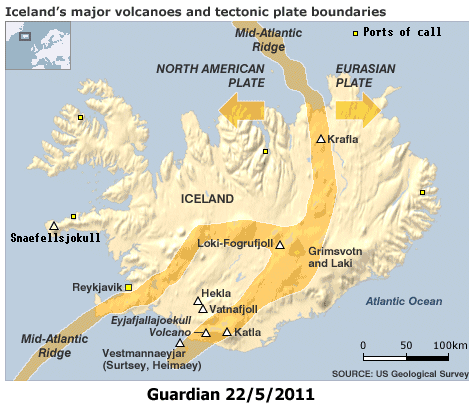
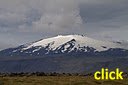 strato-cone volcano Snaefellsjokull made famous by Jules Verne in "Journey to the Centre of
the Earth". If you refer to the tectonic map of
Iceland, you can see that most active volcanoes are in the centre and south.
There is Krafla, north west of lake Myvatn, but the tours do not usually go that
far.
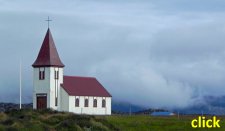 Our first stop, [(1) on the GPS track],
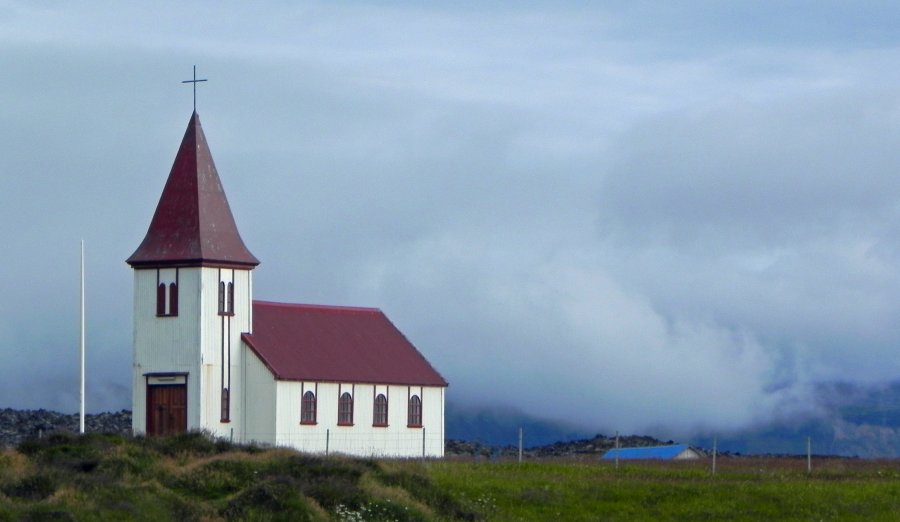
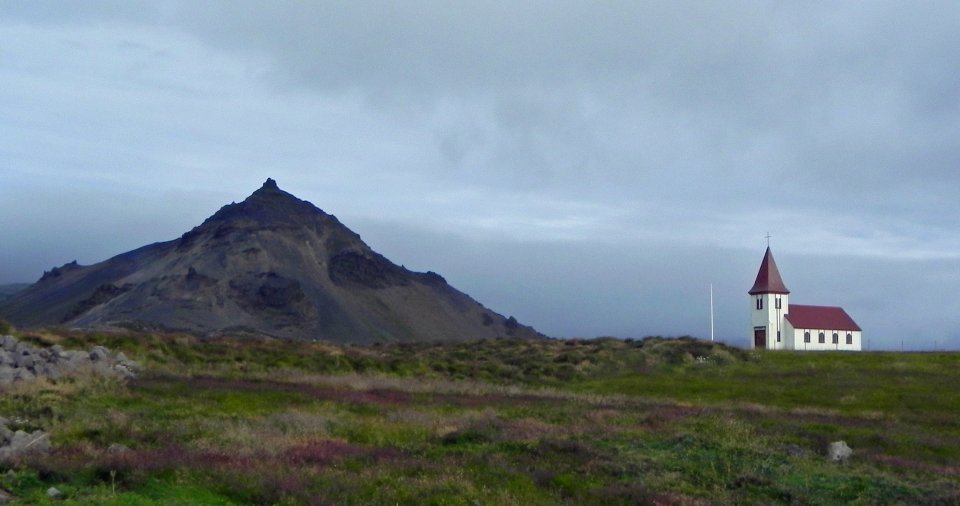
at Djupalonssandur had quite a picturesque Lutheran church, dramatic against the mists
behind it, (after I cloned out the woman bang in the middle of the picture). 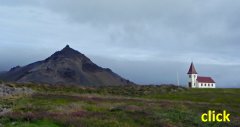 This was actually in the middle of nowhere apart from a huge vocanic ash and lava hill
behind it.
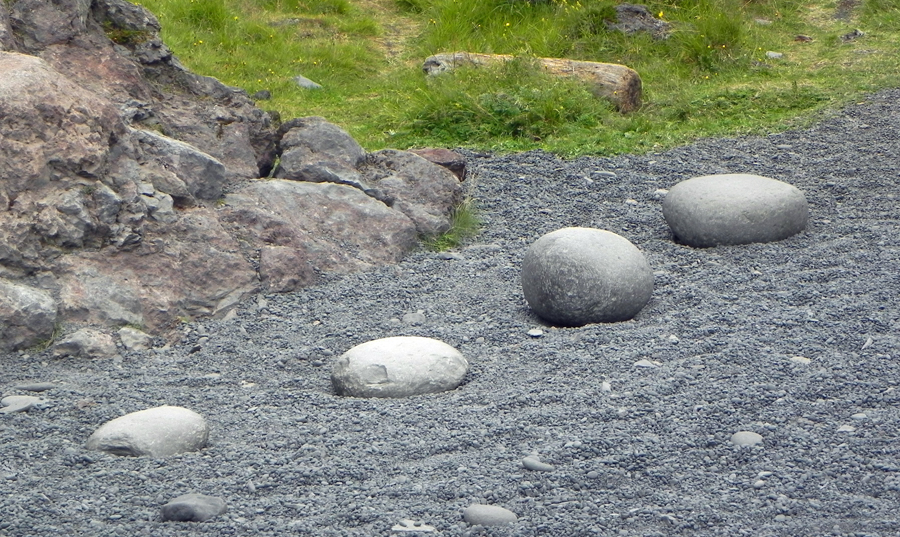
From the car park there was a path leading 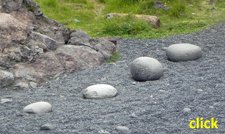 down to the beach where the black
shiny pebbles and lifting stones were. Photography was not easy here as people
were posing in front of the rocks to have their pictures taken. I tried some
stereo pairs but they didn't work out.
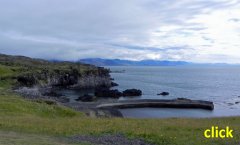 Stop number (2)
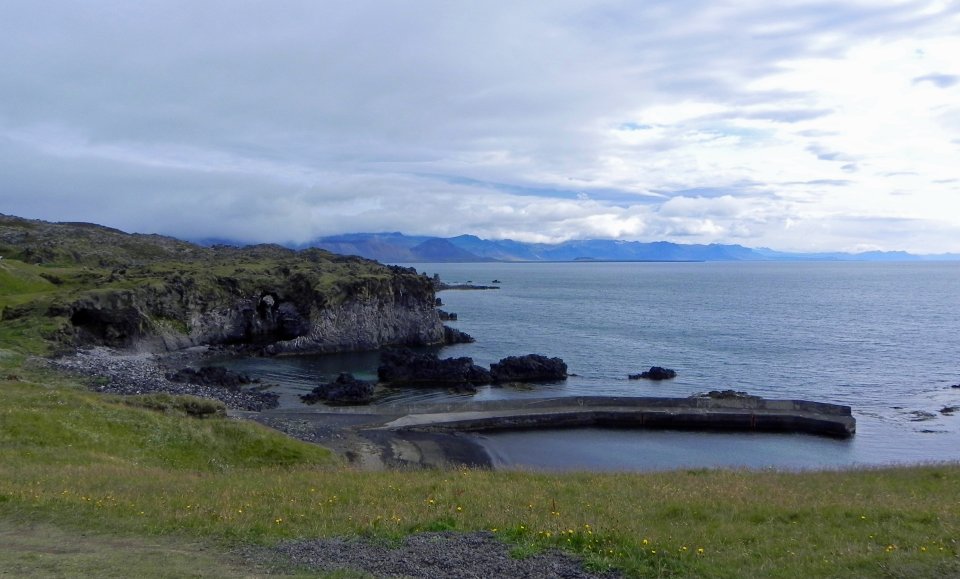
was at Hellnar where there were loos and a harbour overlooking the bay between the Snaefellsnes peninsula and
the Keflavik one. The coast in the background is at Akrar, but further to the right you could see
all the way across to Reykjavik.
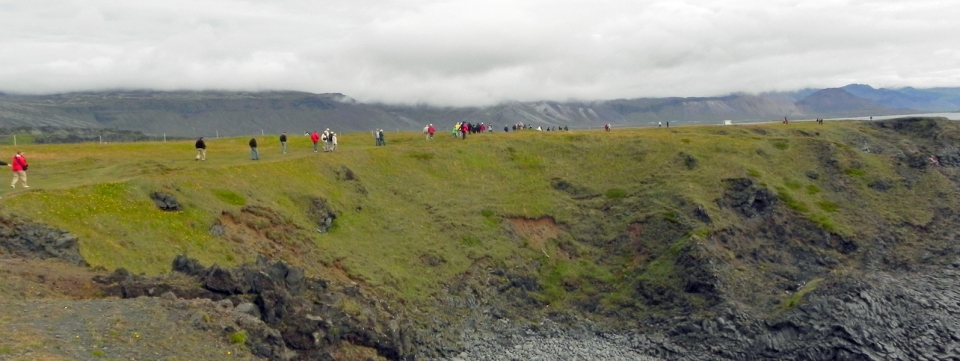
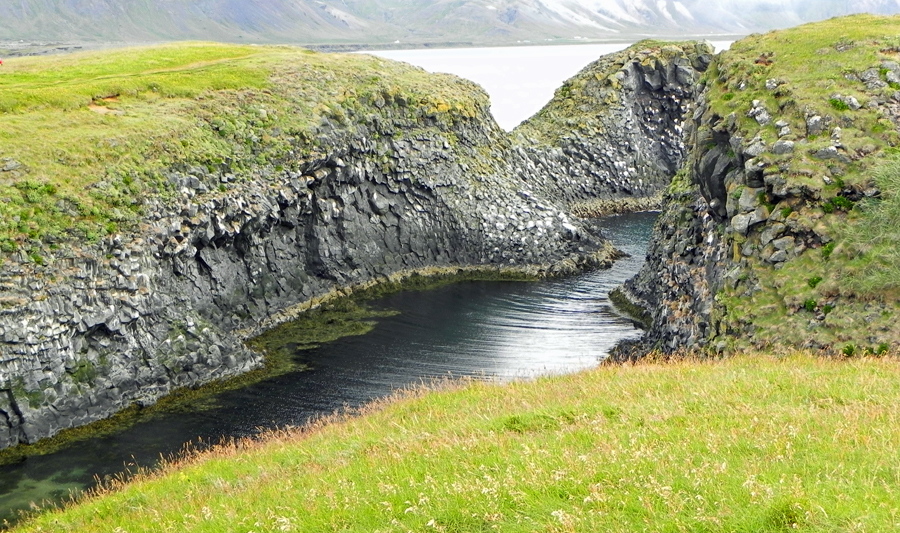
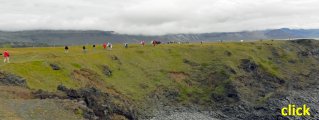 Stop number (3) was at Arnarstapi. We were dropped off in the car park and had a walk of
about a mile or so along the cliffs 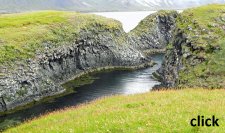 with views of sea birds and rugged lava cliffs as we went.
At the end of the walk there were some small lakes just before the village and the harbour where, as well as
the usual ducks, Mallard and Pochard there were some
Red Necked
Phalaropes.
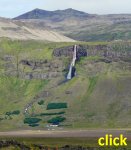 Our final stop number (4) was at Budir. Here there is a rare form of sandy beach for Iceland.
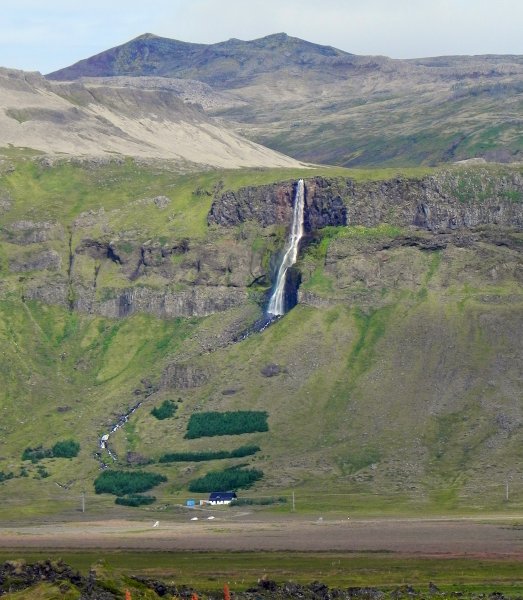
Due the basaltic rock, the sand is usually black or dark grey; here it was a light colour, possibly due to 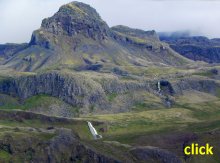 Rhyolite which is formed when lava erupts under ice and
cools quickly. You can see the lighter colour rhyolite in the scree slopes above the waterfall
in the left picture.
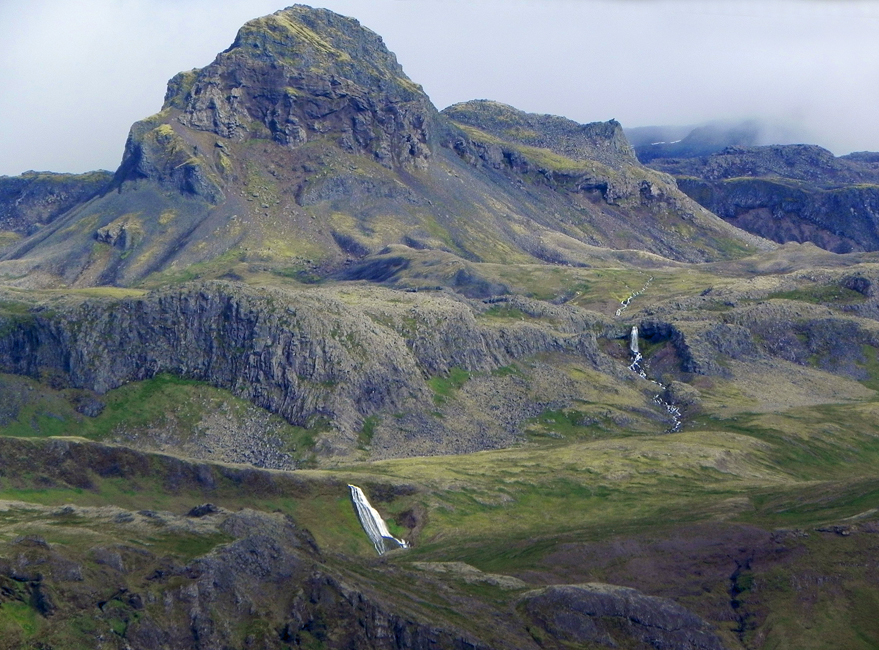
The mountains here were rather spectacular due to varied rock colours. There was another church
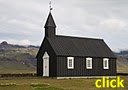 here named after the volcano. We concluded our trip with a drive back over the mountains.
This was a very interesting excursion, we thoroughly enjoyed it and it was well worth the money.
We had one of those fabulous Icelandic guides that never let the truth spoil a good story.
| 
![GPS track]](Grundarfjord.png)