|
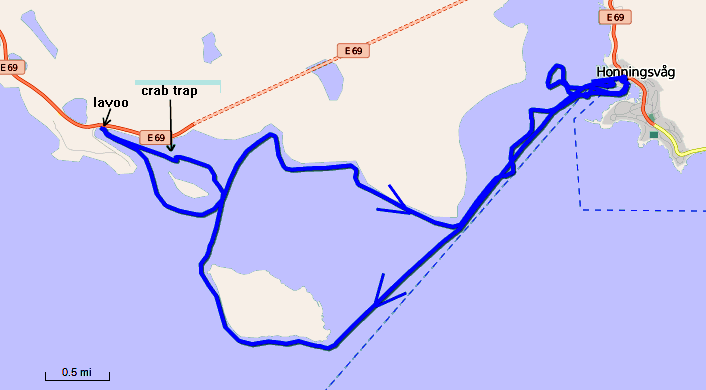 Our track and GPX data. Our excursion
started at 2:30 for 3 and half hours. It was hot again, 24°, and
standing in the shade didn't afford much relief either. It was a short walk
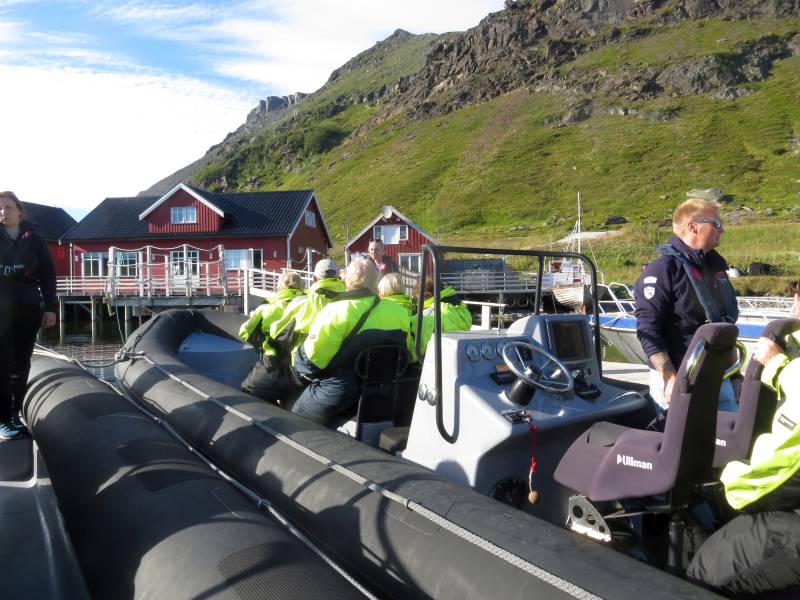
across to 71°N's depot where we were fitted out with flotation suits, needed for
the trip in the RIB (Riged Inflatable Boat). This was like a long Zodiac, 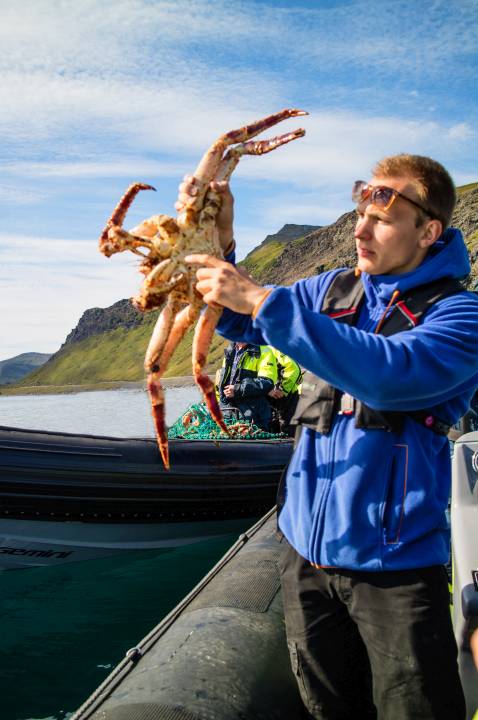 seating 12 passengers in pairs. The seats were like a saddle
and difficult to get into. The trick is not to stand on one leg and try and
swing the other one over, hampered by the flotation suits, but to lean back on the
inflatable side of the boat, so that it is easy to slide one leg over the seat.
We had two boats and once clear of the harbour they opened up and the cooling breeze
was very welcome. We did an S curve around the two islands and then stopped
to haul up the crab traps, they were 30 metres down so took some hauling, particulary
when they had a good catch.
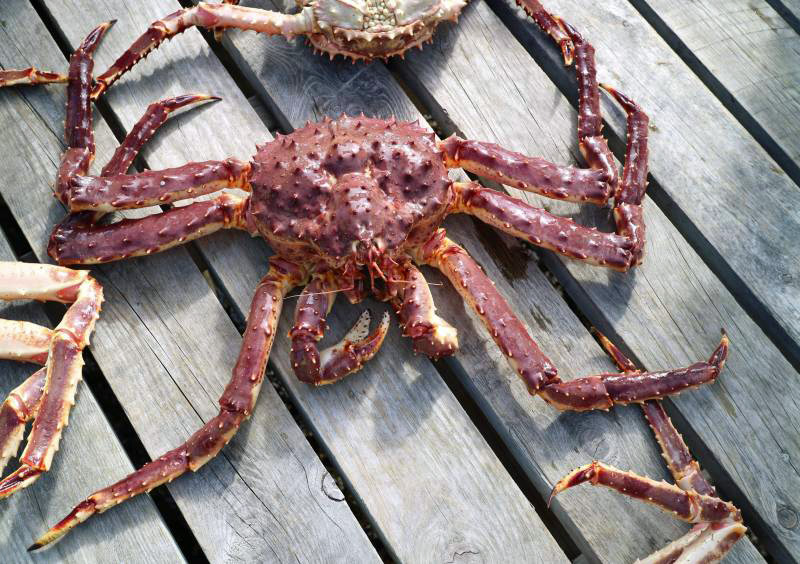  We then continued to the landing stage were they explained
all about the crabs, showed how they were killed and then prepared for cooking.
Only the legs and carapace are used, the body contains no useful meat. The
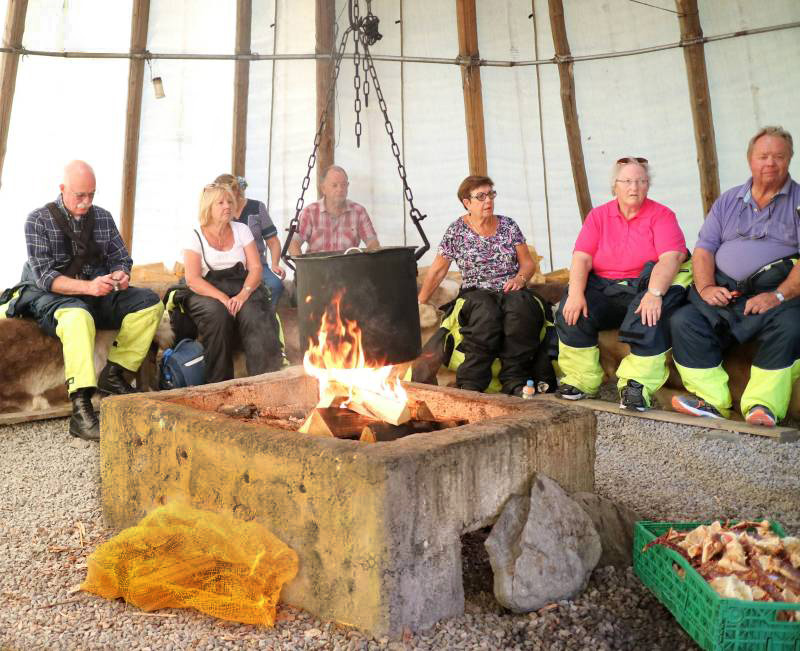
cooking was done in a lavoo (Sami hut) with a huge cauldron over a birch
wood open fire. The water was brought up to boiling then the crab pieces
were put in and the water, now cooled by the cold crab, was brought back to the
boil. Once it reached boiling point the cauldron was removed from the
fire and the crab was left in the hot water for 15 minutes then the hot water poured
away and the crab rinsed three times in cold water. It was then served with a sort
of flat bread (like a pita), mayonaise and lemon. There was plenty to eat
and they brought round seconds several times until everyone was surfeited.
A three kilo crab will make a meal for a family of four. They normally
catch crabs between 2 to 5 kilos, though did have one once of 7 kilos.
 The crabs were introduced in Murmansk to bolster the fishing industry,
but having no naural predators (a common problem with human interventions), they spread
to Norway and have got as far as Tromso. Crab fishing has become quite
a profitable industry and is controlled by license and quota. However since
the further spread of the crab is a threat to the cod spwaning grounds in the Lofoten
Islands there are no controls on crab fishing west of Honnigsvag, except that if you
catch a small one you are supposed to kill it rather than throw it back.
Time was now getting on and some of us were on first sitting and getting a bit
anxious. The boats did not leave until 5:30 but we were still back in our
cabins by 6:00 so still just in time for dinner. It would have been better
to have scheduled this tour for 30 minutes or an hour earlier so that we would have had
time to have a shower on return.
|